
The chronicles compiled by Jehan, Jean, or sometimes John Froissart, towards the end of the fourteenth century, are filled with dramatic accounts of battles, sieges and the political intrigue which characterised the decades of the Hundred Years War and its surrounding conflicts. One of Froissart’s most evocative anecdotes relates a chance meeting at Orthès, where he was staying at the “hôtel of the Moon” or Moon Inn.
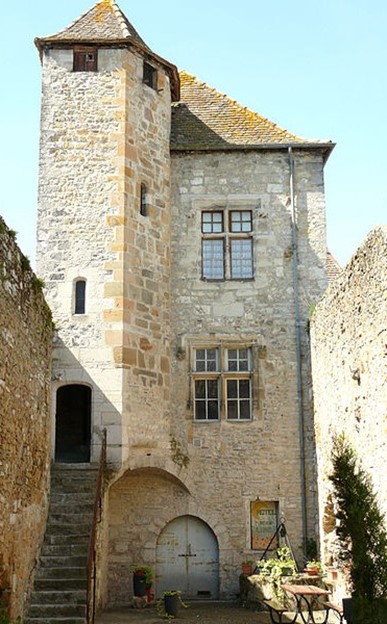
The Moon Inn, Orthés
Froissart watched the arrival of another guest “in grand array, having led horses with him like to a great baron, and he and his attendants were served on plate of gold and silver.” Intrigued and impressed, Froissart enquired who was the new arrival and learnt that he was “a Gascon squire, called the bastot de Mauléon, an expert man at arms, and about fifty years old, according to his appearance” and, according to other guests at the Moon, “as able a captain and as good a man at arms as any existing.”
The train of horses and gold plate attest to de Mauléon’s success but for any soldier of fortune to have arrived at his fifth decade suggests more than average cunning and good fortune. Froissart was delighted to spend a convivial evening with de Mauléon, yarning the time away while they awaited a midnight supper.
At one time scholars regarded Froissart’s account of the Bastot, or rather more properly the Bascot, as the name seems to imply a Basque heritage, as either entirely fabricated or the amalgam of life-stories of several mercenary captains. Now, however, thanks to a study by Guilhem Pépin, the Bascot is revealed as (probably) Galhardet de Mauléon, a Gascon squire from the region south of Bordeaux.
We have met the Bascot already, occupying and pillaging the country around La Charité. De Mauléon, himself, seems to have occupied a smaller castle or ‘fort’, further south. He told Froissart:“I held at this period a castle called le Bec d’Allier, pretty near to la Charité, on the road to the Bourbonnois, and had under me forty lances, where I made great profit from the country near Moulins, and St. Pourçain and St Pierre le Moustier.”
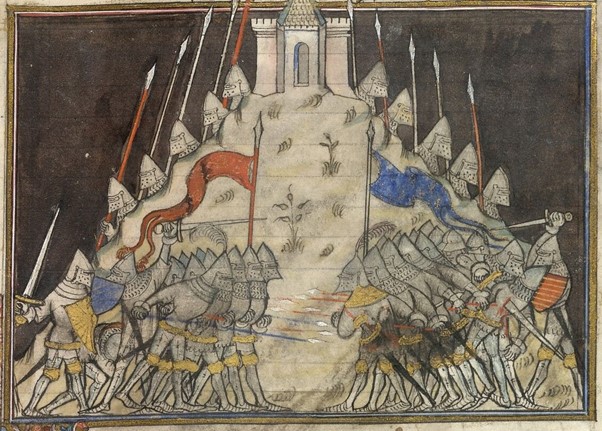
The Battle of Cocherel, 13 May, 1364
Indeed, that the castle of le Bec d’Allier was the Bascot’s base is attested by another anecdote concerning the battle of Cocherel in 1364. Although ostensibly a supporter of the English cause in France, De Mauléon had taken advantage of a brief period of peace to join the army of Jean de Grailly, the Captal de Buch, who had taken the side of King Charles of Navarre against Charles V of France. He took with him twelve of the forty lances (a ‘lance’ being usually regarded as a mounted knight or man-at-arms with perhaps half-a-dozen supporting troops) that de Mauléon had in his retinue at Bec d’Allier and around La Charité.
The Navarrese expedition into Normandy proved disastrous. The French, led by Bertrand Du Guescelin, were victorious and De Mauléon found himself a prisoner, held for a ransom of a thousand francs. By good fortune the Bascot’s captor was his cousin, Bernard de Turide, who proved trusting enough to send him home to raise the ransom rather than keeping him in a cell until it was paid.
De Mauléon rode “to my fort of Bec D’Alliers. Instantly on my arrival, I counted out to one of my servants a thousand francs, which I charged him to carry to Paris, and bring me back letters of acquittance for the payment, which he did.” The significance here being not so much the evidence of chivalry, even amongst freebooters, nor the ease with which the cash was raised, but the fact that De Mauléon’s was not at La Charité (or anywhere else) but at the castle of Bec D’Alliers.
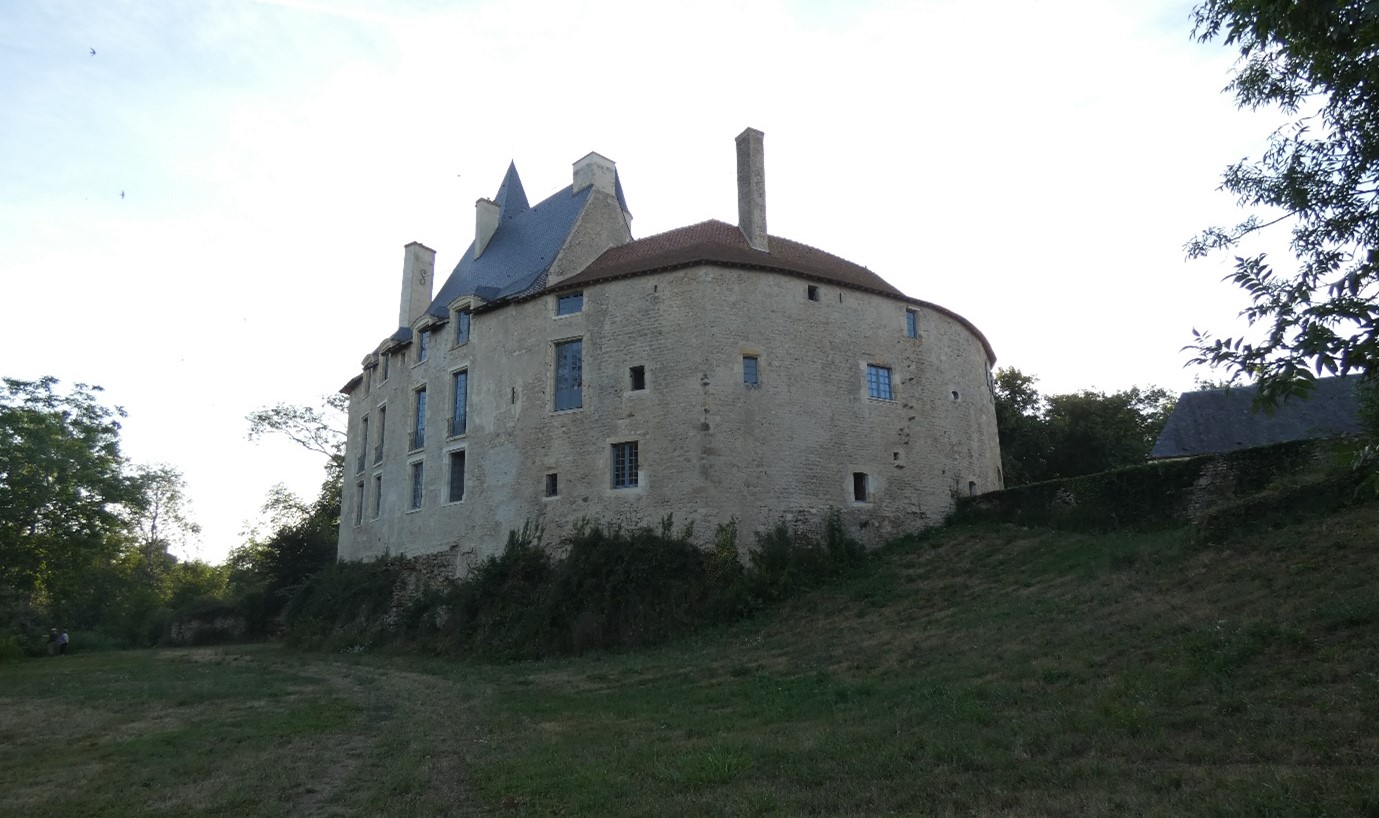
Chateau de Meauce – the castle of Bec D’Alliers?
So, where is the castle of Bec D’Alliers? Recourse to the map of the territory south of La Charité will swiftly reveal the Bec d’Alliers; the confluence of the Rivers Loire and Allier and both a beauty-spot and place of great interest to natural historians and ornithologists. There is no castle.
However, less than five miles down the River Allier is the Chateau de Meauce. Slightly nearer is the Chateau de Marais, a picturesque moated castle, but begun several decades too late for the Bascot to have stored his loot there. There is also the impressive Chateau de Cuffy, built by the Dukes of Nevers, perhaps two and a half miles away to the west, but while that is certainly old and large enough to have housed some of De Mauléon’s forty lances, it is said to have been one of the few castles to have withstood the Anglo-Burgundian incursions.
Even without the capricious presence of De Mauléon and his forty (or more) thieves, the Chateau de Meauce merits a visit. A generation after the Bascot, (as a notice in the castle records) the castle was held by an even greater rogue, Perrinet Gressart, whose freebooting we shall encounter at La Charité, at Passy-les-Tours and Saint Pierre le Moutier.
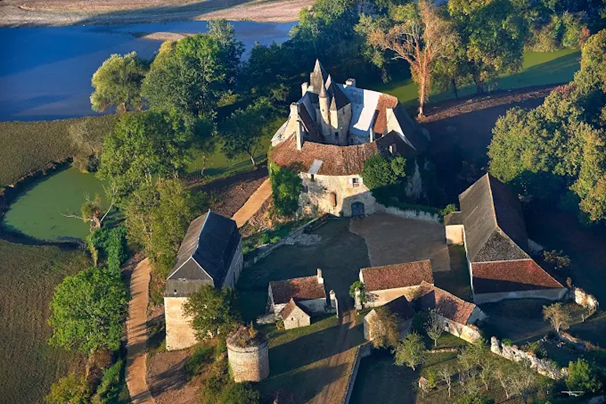
Chateau de Meauce has a strong oval keep, set upon a rocky outcrop above the Ruisseau de Gain (or Gain Brook) which has, in the past, been diverted to form a moat and runs on into the Allier. To the north-east of the keep are ancillary buildings; a readily defensible stables, barns and a dovecot, linked by the remains of a curtain wall. To the south and east the ground falls away steeply, adding to the defensive appearance of the site.
In more peaceful times, presumably in the seventeenth and eighteenth centuries, the approach to the keep appears to have been changed to the north rather than north-east, to bring visitors along an avenue of trees (rather than through the ‘farmyard’). At the same time a new entrance was made into the keep, which itself received new domestic, rather than defensive windows on the new, south-western front. To the east, the keep retains much of its mediaeval appearance as does its inner courtyard.
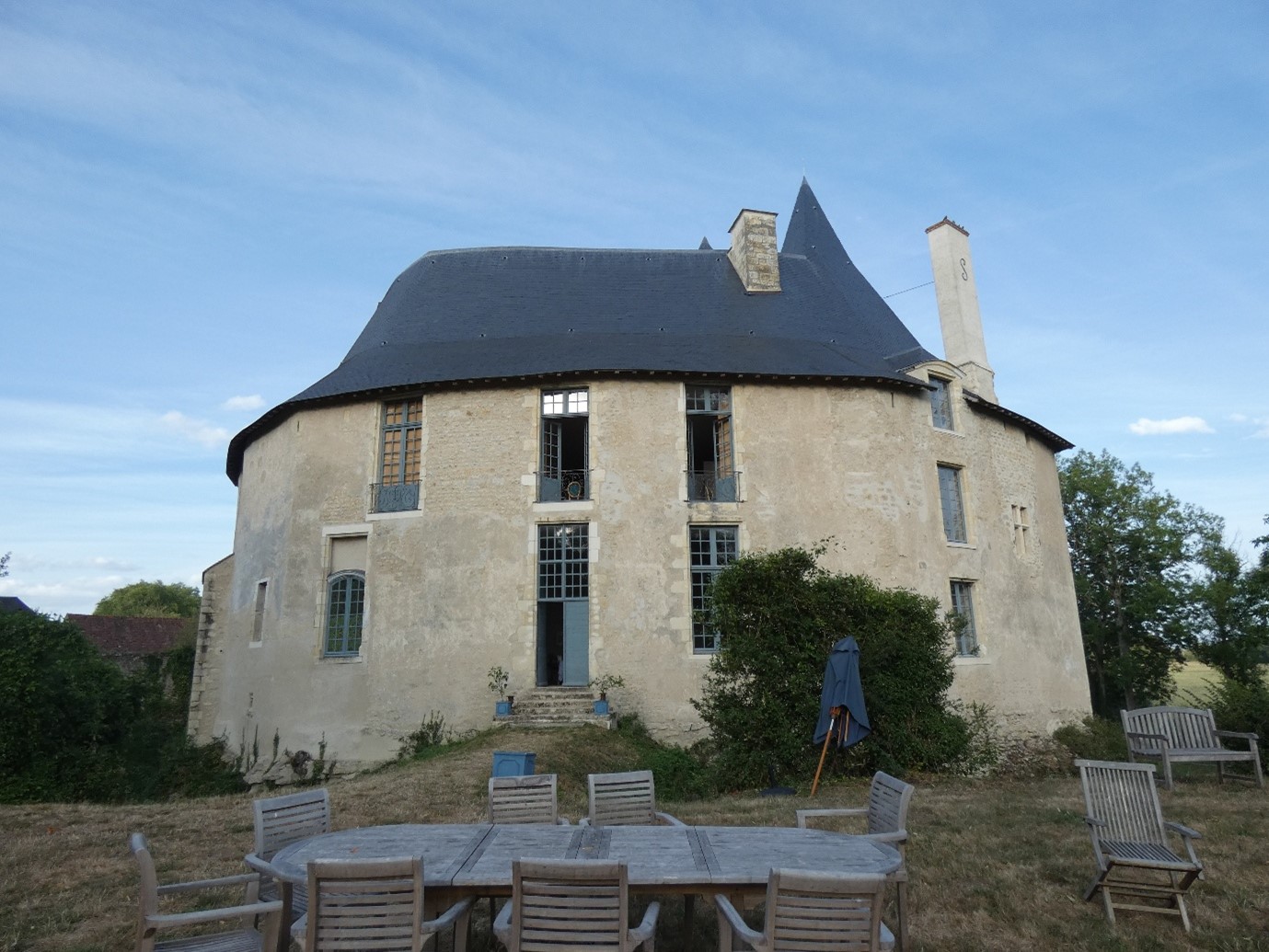
The new entrance and ‘modernised’, domestic windows.
The chateau provides an agreeable bed and breakfast stop. The site can be explored and there are explanatory panels in the barn, giving something of the history of the chateau. It is rich in wild-life too with seasonal visitations by swallows, which colonise the stables in the summer, and cranes in the Autumn. Sitting out beside the Gain and castle pond provides a feast for the senses of the naturalists amongst Hundred Years War wanderers, with glimpses of kingfishers and coypu, as well as the grumblings, clacking and curious burps of frogs, toads, storks and even (apparently) beaver – unseen but evident from their wood-working!
If Chateau de Meauce wasn’t the base of the Bascot de Mauléon, it was assuredly one of the two dozen or more castles he told Froissart were held by his associates in the lands south of La Charité. It should find a place on any itinerary and the fortunate visitor will contrive to book a room for the night.
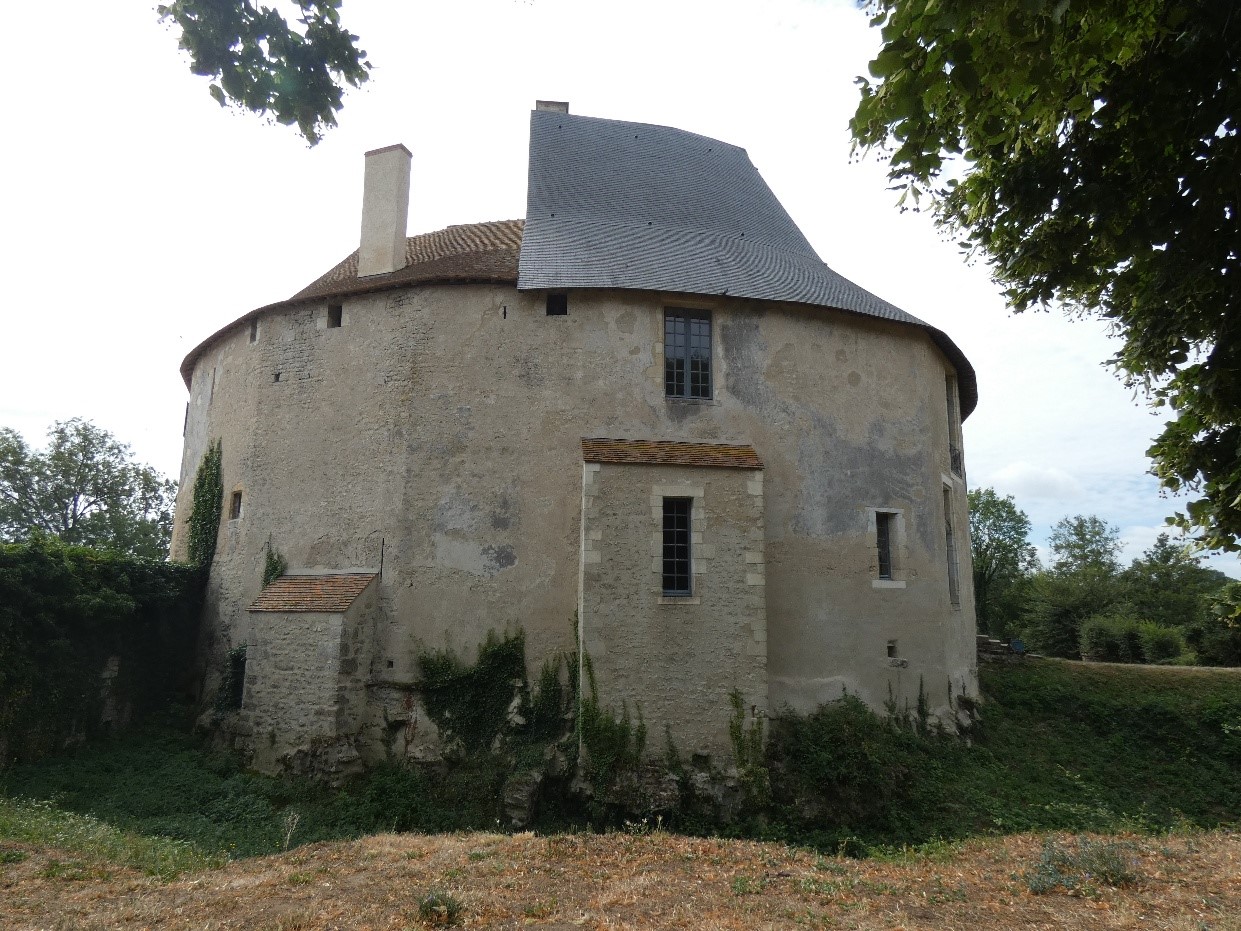
The unreconstructed, more defensive aspect of the keep at the Chateau de Meauce
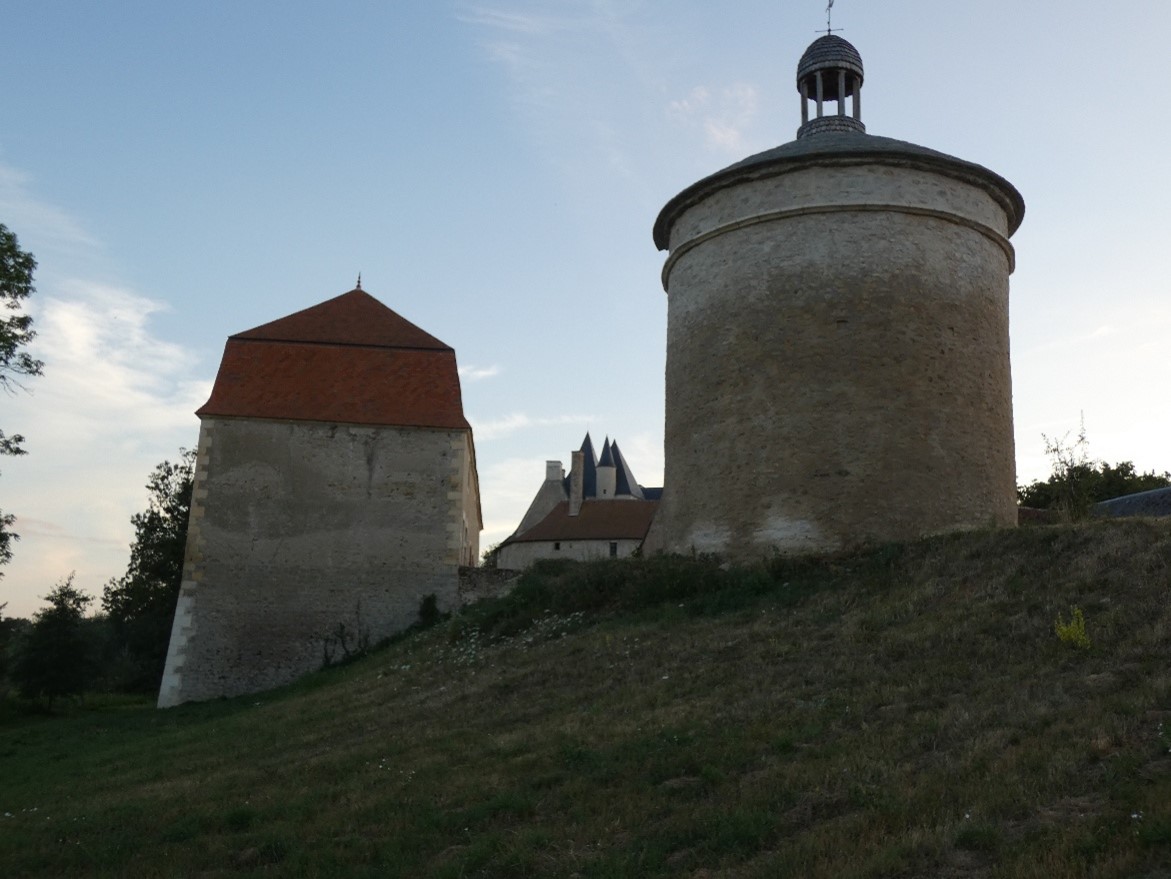
The martial aspect of the stables and dovecot
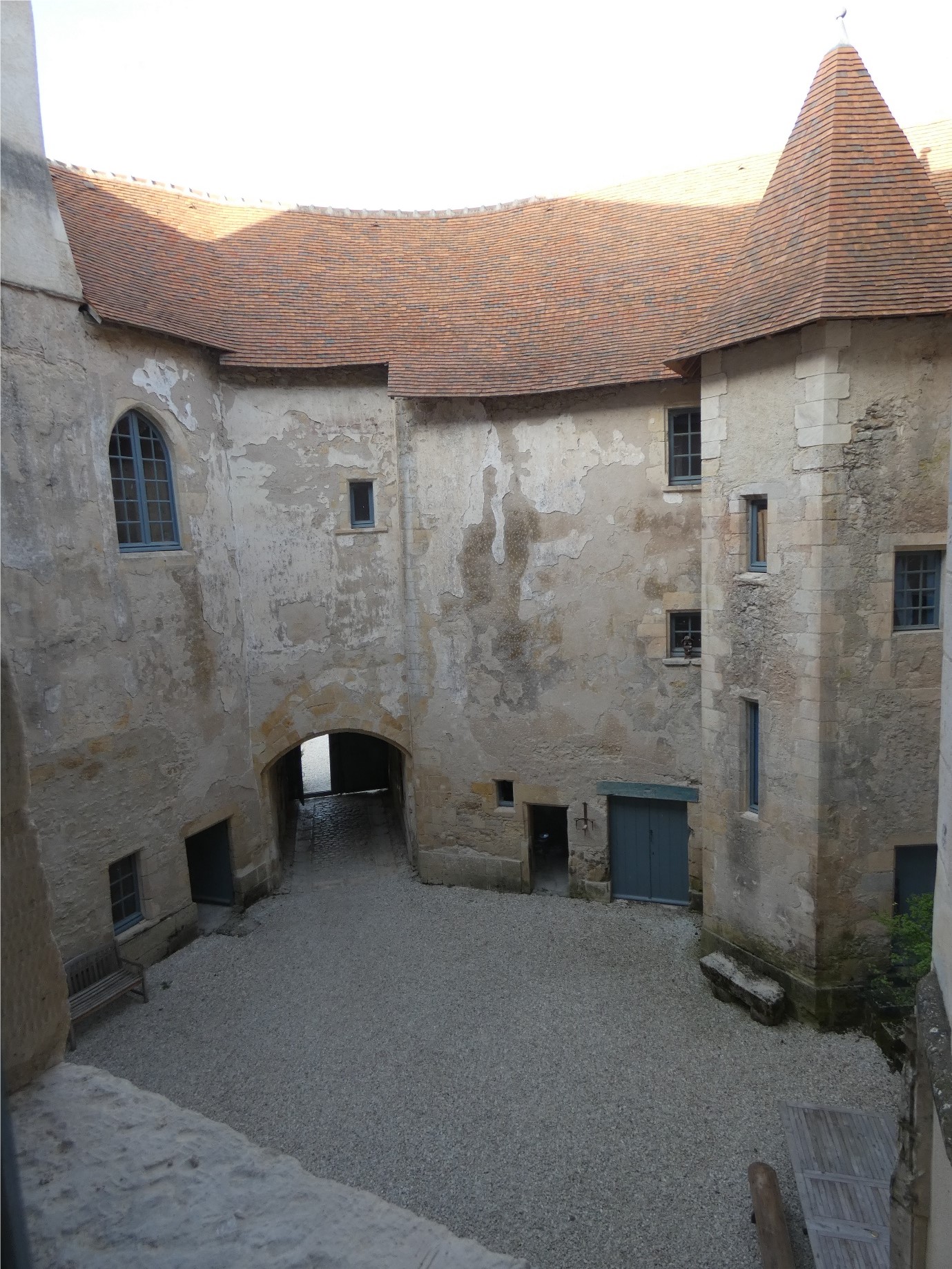
The inner courtyard of the keep at Chateau de Meauce