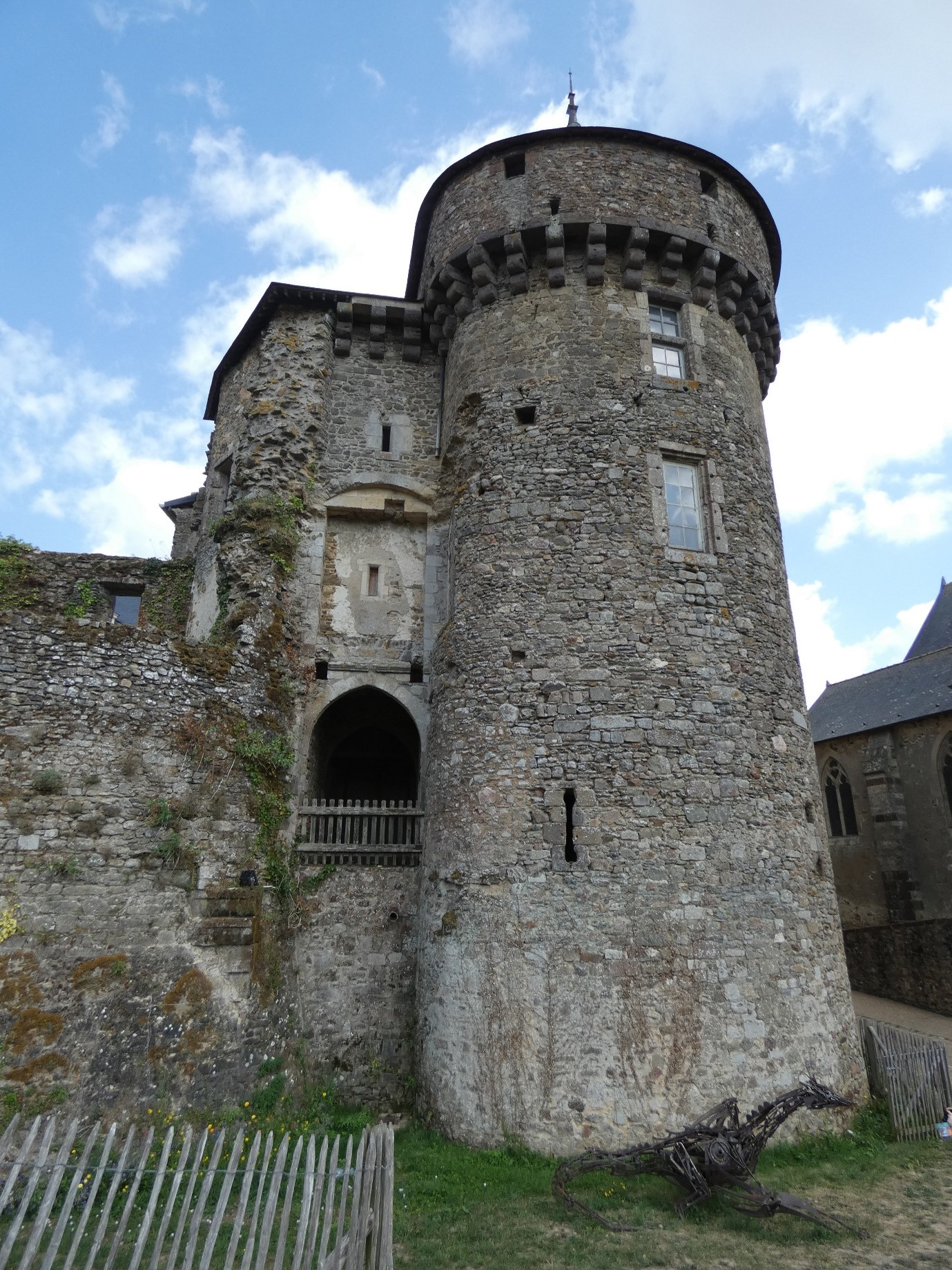
The castle at Sillé-le-Guillaume is certainly an ancient foundation, first recorded in 1070, and presumably considerably older. It was probably originally a motte and bailey, built by Guillaume de Sillé, who held it on behalf of the Counts of Maine. There is a suggestion that the castle was even besieged by William the Conqueror and its situation close to Normandy and Brittany and later between the territory of the English and the Armagnac French made it a frontier stronghold constantly under threat of attack.
The English campaigns after the victory at Verneuil in 1424, saw expansion in several directions; one army under the earl of Salisbury advancing as far as Le Mans. Sillé seems to have fallen to the English then but been swiftly retaken. The following year, 1425, Le Mans fell to the English and once again Sillé-le-Guillaume became an English base.
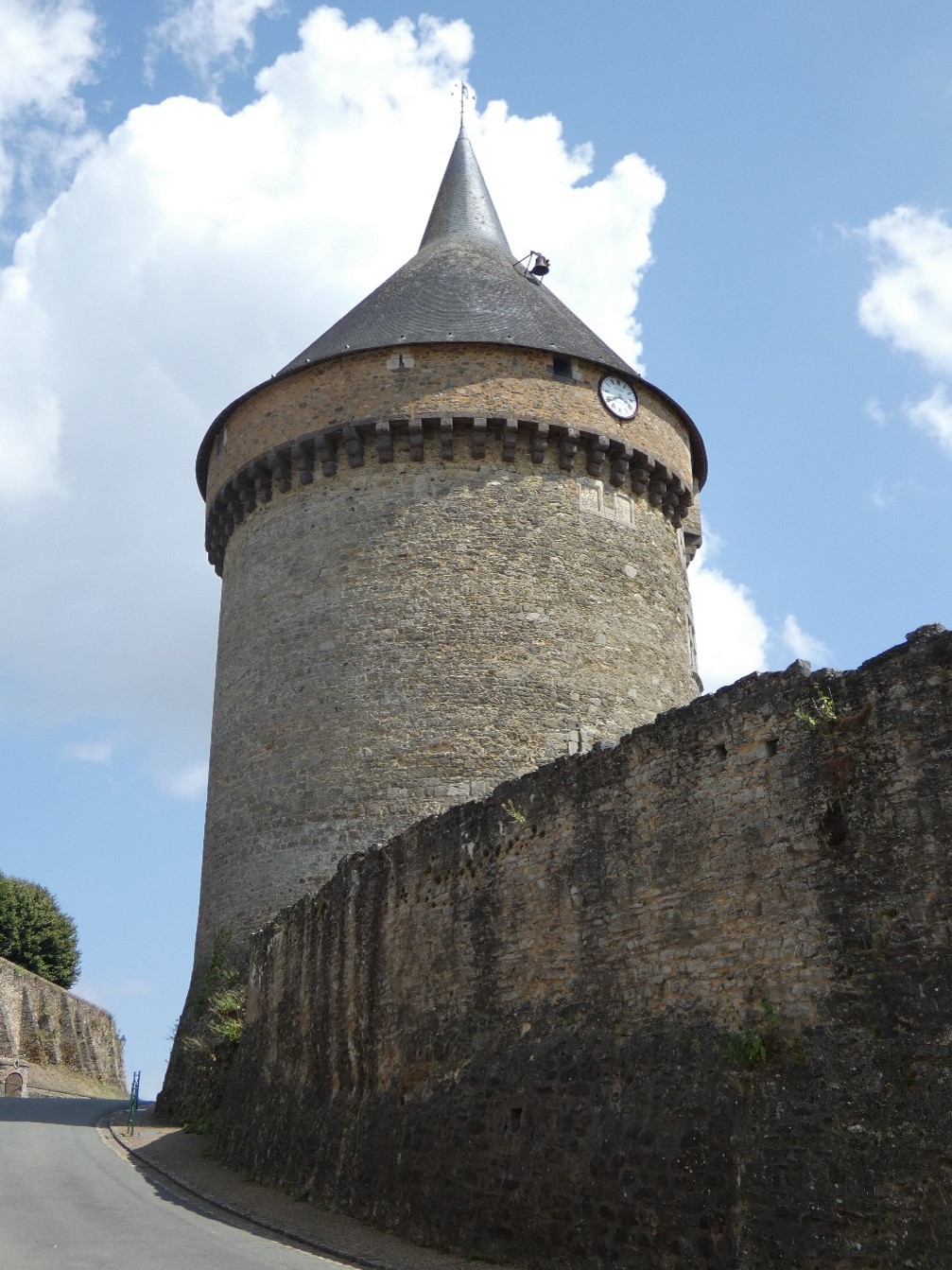
The Beauvau Tower and curtain wall – from the 1460s rebuilding but almost certainly on earlier foundations. Part of the surviving town wall can be seen further up the hill to the left.
One of those riding high on the tide of English success was John Fastolf, a Norfolk adventurer and close adherent of the Duke of Bedford as Regent of France for the infant Henry VI. Fastolf was rewarded for his loyal service with, amongst other honours, the barony of Sillé-le-Guillaume which raised him to an aristocratic status he lacked in England. It is fair to say that Fastolf had become dependent for much of his income and most of his social status upon the continued success of the Lancastrian project in France.
It is unclear, however, how often Fastolf visited his castle and barony. He was rarely unemployed, either diplomatically or militarily, and scarcely features in the see-sawing fate of his castle. It fell again to the French in the near collapse of the defences in the area following the defeats at Orleans and Patay in 1429 and the Armagnac advances under the banner of Joan of Arc.
By 1433, however, the English were recovering some of their lost ground and an army led by the Earl of Arundel duly appeared before the castle at Sillé and demanded its surrender. As was usual the commander of the garrison, Aimery d’Anthenaise (who had fought and been captured at Verneuil), was content to negotiate – and surrender was agreed in six weeks unless a relief force arrived first.
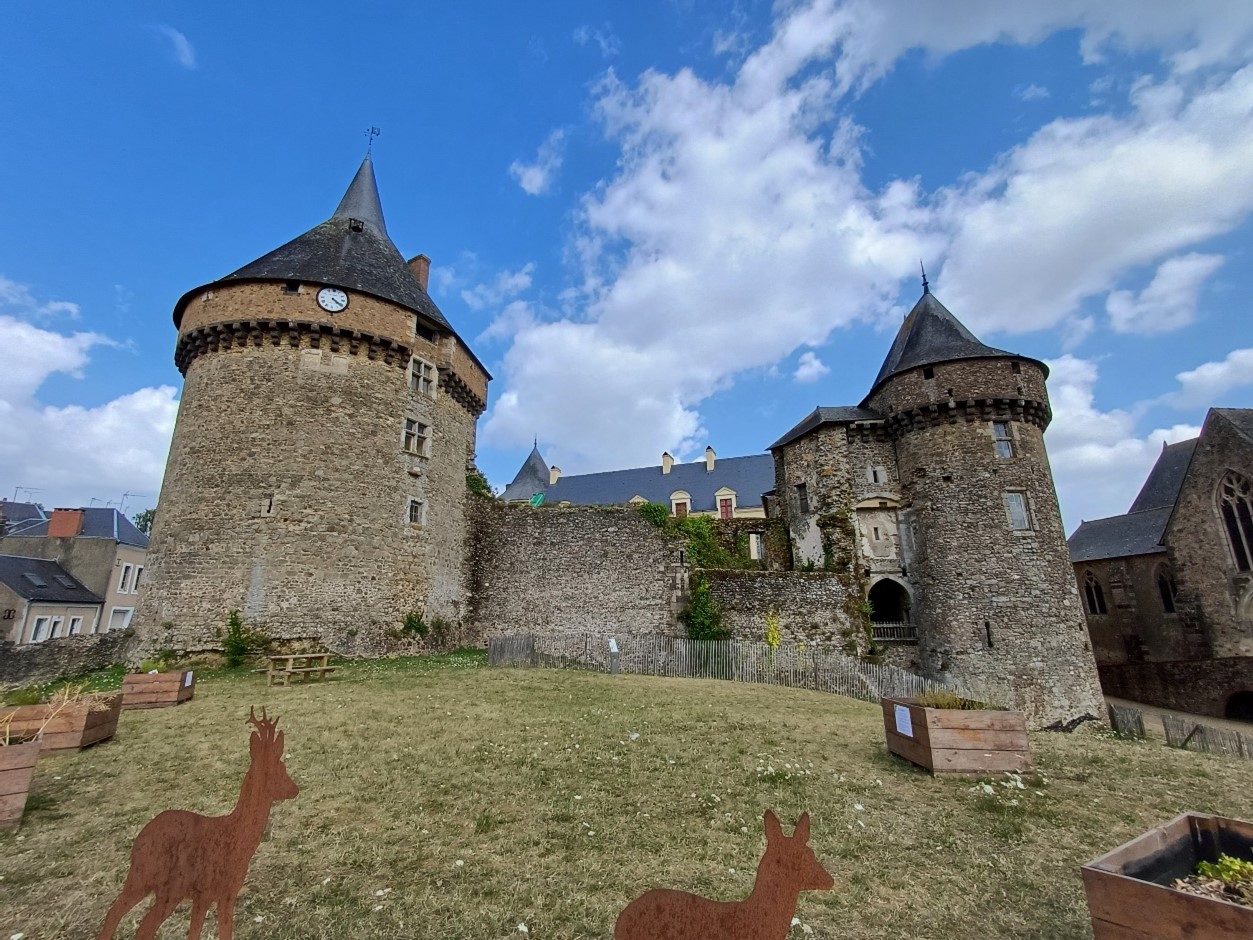
The Beauvau tower and abandoned gateway from the mound of the late 15th century ‘Boulevard d’Artillerie.’
Remarkably, a French army was mobilised by the Duke of Alençon and the Constable of France, Arthur de Richemont, which reached Sillé-le-Guillaume just in time to redeem Aimery’s pledge. The rival armies then deployed but Alençon considered the English position too strong and declined to fight. To the surprise of many, Arundel seems to have accepted the relief of Sillé nonetheless and returned the hostages taken as a guarantee of the garrison’s fidelity. However, once the French army had withdrawn, Arundel returned and, catching the garrison unawares, proceeded to take the castle of Sillé by storm.
The barony remained, nominally, the property of Sir John Fastolf until the fall of Lancastrian holdings in the North of France. The castle and its lands were eventually bargained away in exchange for truces and attempts at peace. Fastolf eventually claimed compensation of 2,500 marks, or just over £1,600 for his property lost by the English government.
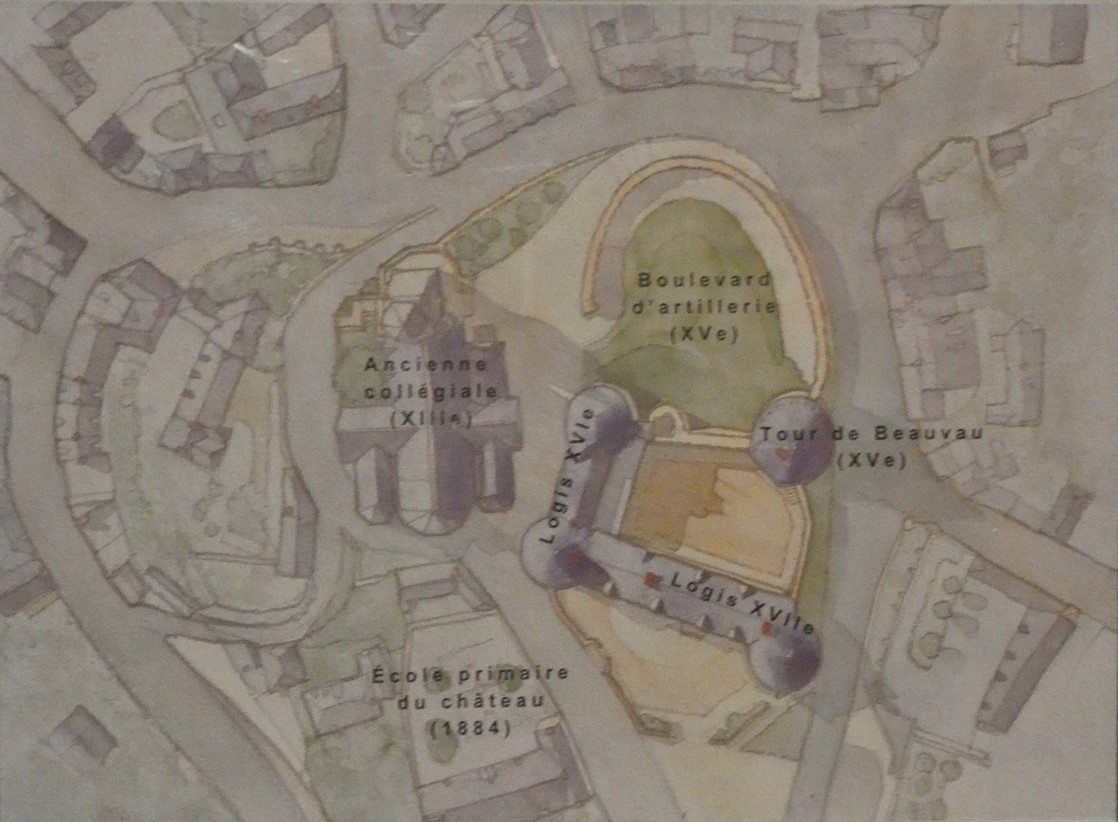
The problem with Sillé-le-Guillaume is to determine how much of the still-impressive castle saw action during the Hundred Years War. It is clear that the fortress was substantially rebuilt in the 1460s and has undergone much renovation since. Nevertheless, the bases of the massive towers and substantial gatehouse, later walled-up, in between, seem likely to have been retained from the castle’s early fifteenth century state. A long run of curtain wall, with round turrets, which extends eastward from the castle, is likely also to be a survival of the fortified town of Sillé.
The castle is slowly being renovated and is open to the public for a small fee. There are displays of weapons and recreated domestic scenes. Although much of the surviving masonry and a mound designed for artillery in front of the round towers is of a later period, Sillé-le-Guillaume does still retain some of the atmosphere of Fastolf’s day.