

Saint-Pierre-le-Moutier is a sleepy, but not unattractive little town, about eighteen miles south of Nevers. It is somewhat of a backwater now but in the late 1420s was at the centre of the rich agricultural land between the Rivers Allier and Loire. With a surrounding wall and ditch, protected by half-a-dozen towers and three fortified gates, Saint-Pierre was also a safe-haven despite being in the contested borderland between Anglo-Burgundian and Armagnac territory. Curiously, however, the town was (strictly-speaking) in neither camp, as it was held by the great freebooter, Perrinet Gressart, whose professed allegiance was with the English, though in realty his loyalty was more self-centred.
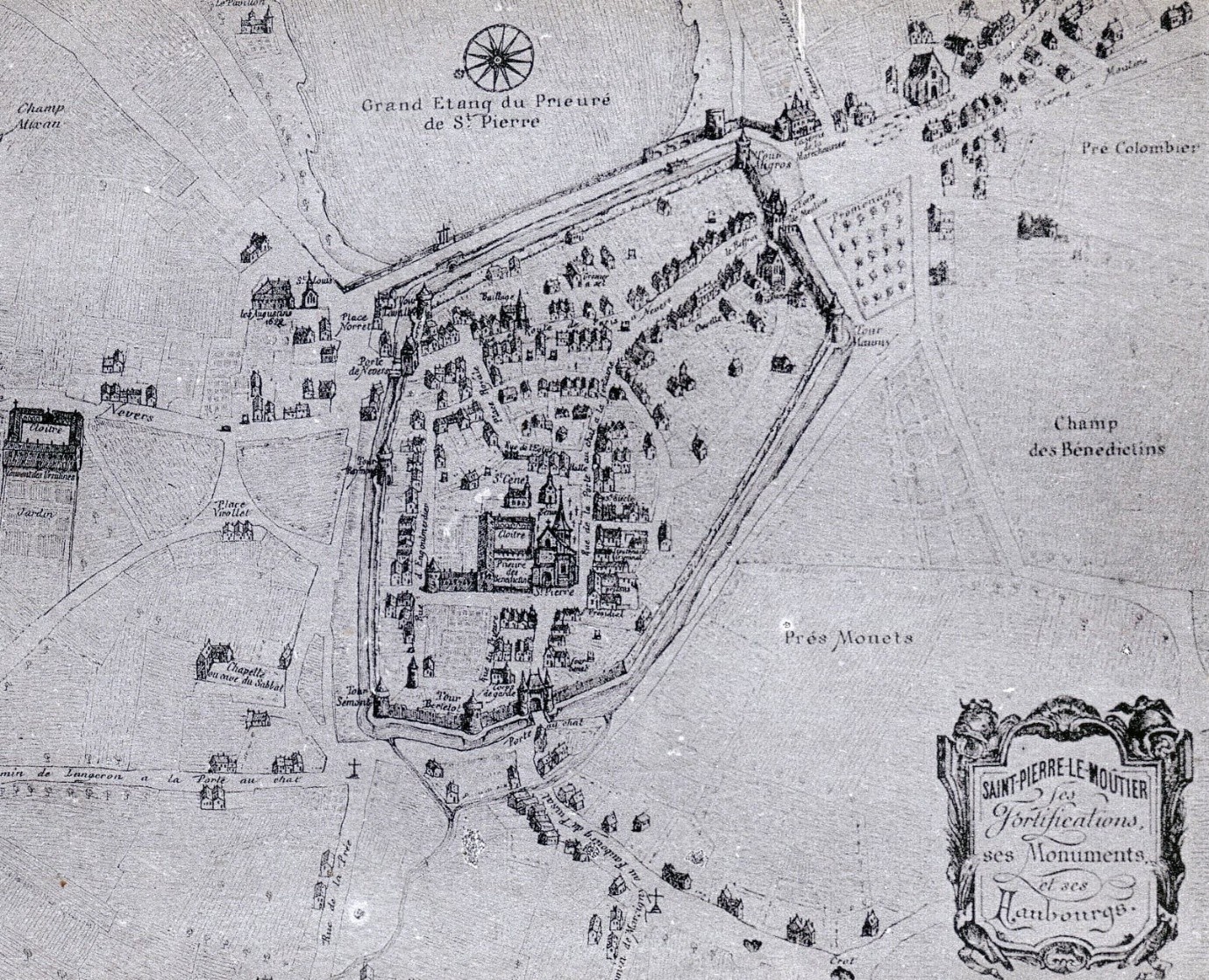
In the autumn of 1429, fresh from a successful campaign along the Loire and the culminating coronation of the Dauphin at Rheims, Joan of Arc’s small army was despatched against Saint-Pierre. It seems not unlikely that Joan had become rather a nuisance, ever urging action, and to send her, despite the approach of winter, against Gressart also served the desire for revenge of Georges de la Tremoille, a court favourite, who had once been held for ransom by the mercenary captain.
The siege of Saint-Pierre began in October 1429 and by the beginning of November, the Dauphinists had (in the words of Joan’s own letter asking for resupply from the town of Riom) expended “great quantities of gunpowder, arrows, and other equipment of war…”
Probably on 4 November 1429, it was decided to make a last effort to seize Saint-Pierre by assault. The garrison proved determined enough, however, and the attack foundered against the town walls and moat. The Dauphinists fell back, even Joan’s companion, Jean d’Aulon (whose account of the attack is one of the few surviving sources) limping away with an arrow-wound to his heel. The Maid, however, remained, urging on her discouraged troops with the declaration that she had with her a (presumably Holy) company of fifty-thousand men.
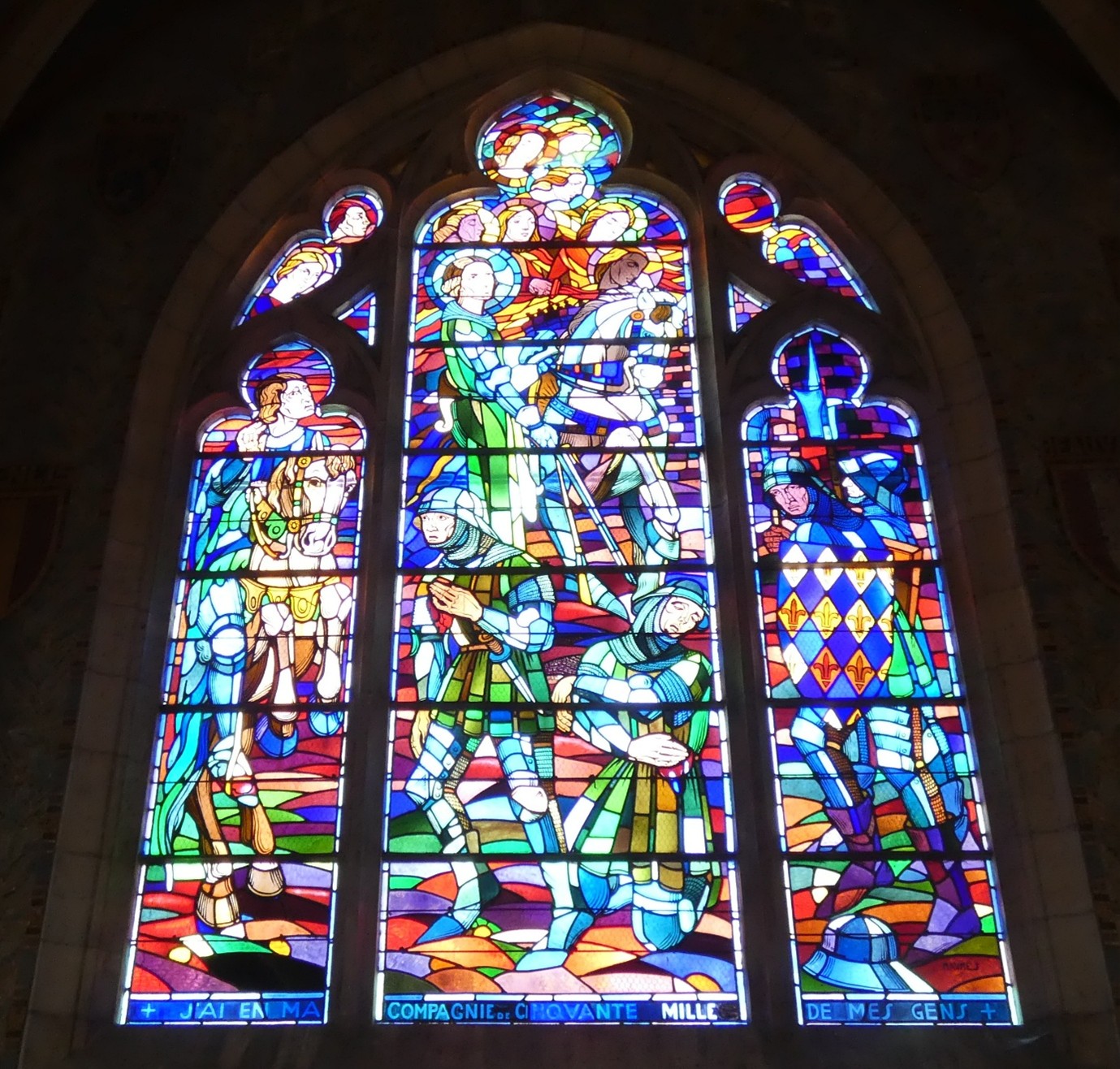
Stained-glass in the parish church showing the attack on Saint-Pierre and some of Joan’s ‘cinquante mille’ followers.
More practically, Joan followed William the Conqueror’s gesture at Hastings, showing her face by removing her helmet and commanding “Faggots and hurdles, everyone, to build a bridge!” The moat was thereby filled, and the Maid’s reinvigorated soldiers stormed across and scaled the walls into the town. The garrison’s morale must have been fairly brittle, for it broke almost immediately and Gressart’s routiers and townsfolk fled.
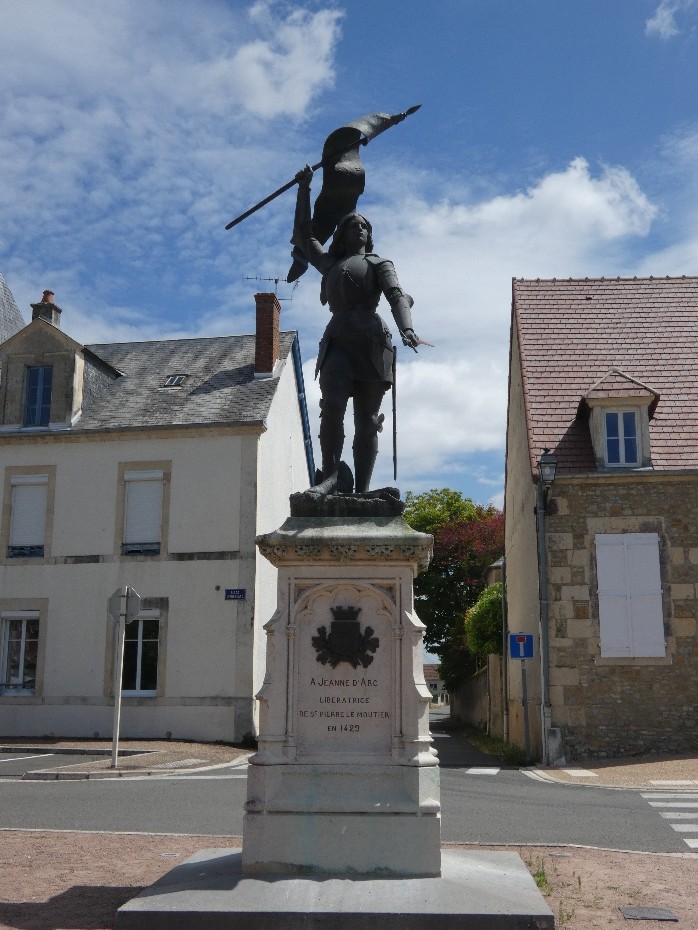
The statue of Joan of Arc at the southern edge of Saint-Pierre.
For once, it seems, Joan of Arc’s influence took effect. There seems to have been neither a widespread massacre, nor a great pillaging. The church was preserved and its relics and other material stored there kept largely safe. The victorious Armagnacs moved on towards La Charité, but with badly depleted munitions and increasingly inclement weather.
For the Hundred Years War wanderer, Saint-Pierre-le-Moutier is an agreeable stop. The town offers easy parking and a variety of places for refreshment. It is easy to explore the sights too, some of which are indicated with excellent information boards.
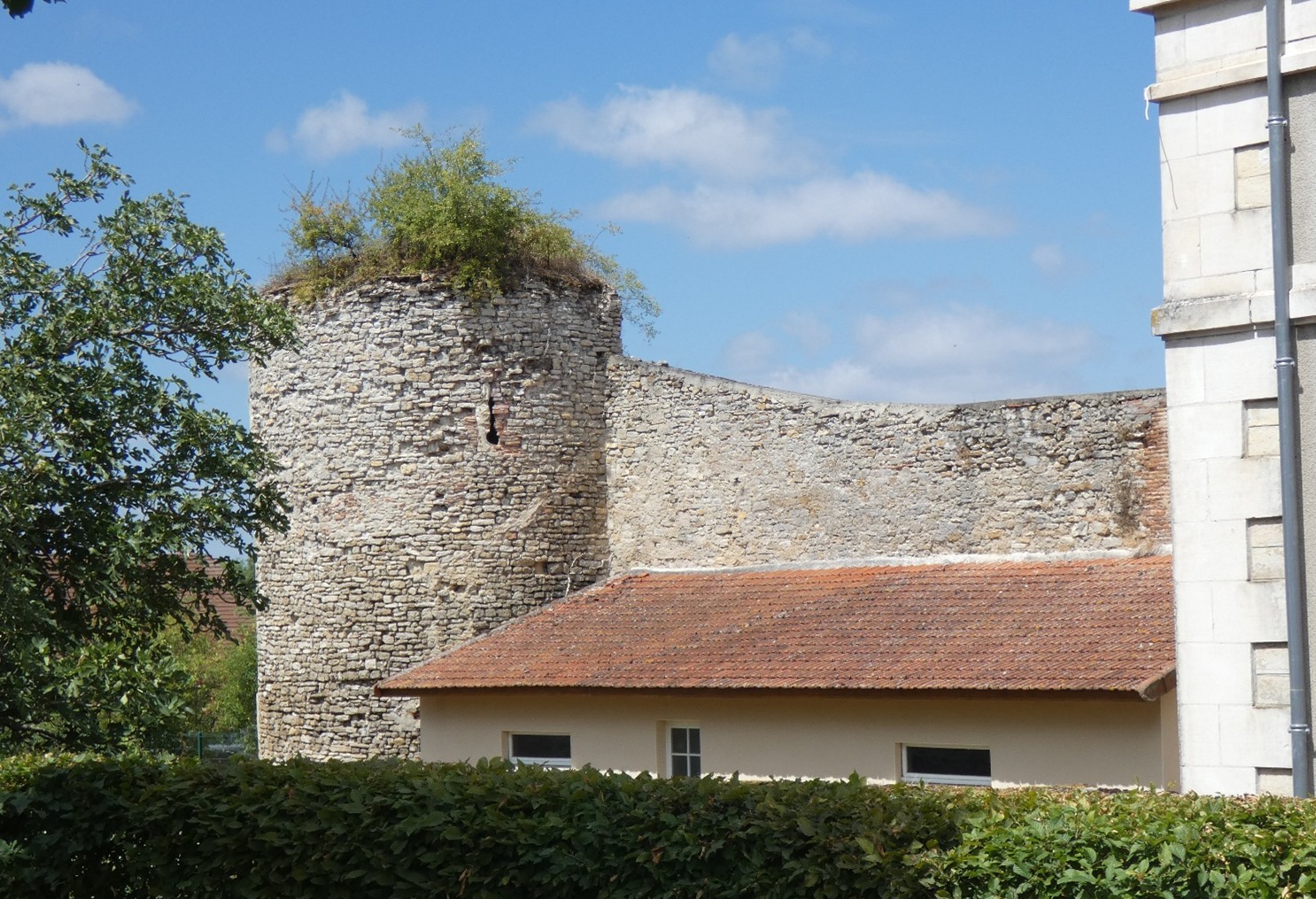
One of the surviving flanking towers and a stretch of the town wall opposite the statue of Joan of Arc.
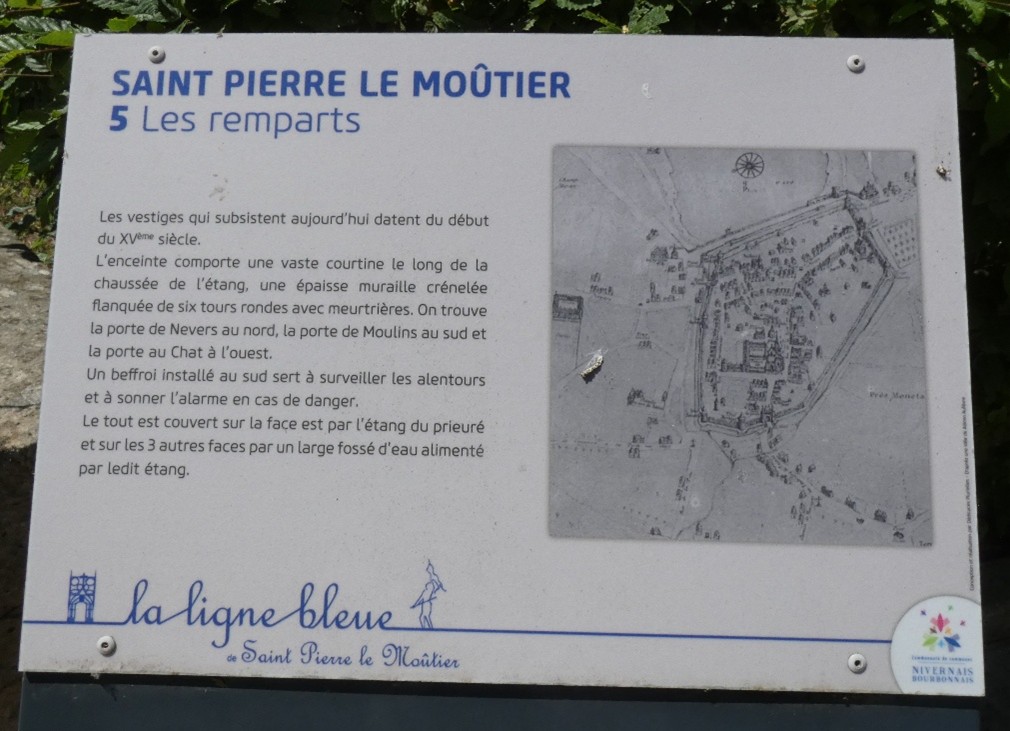
The ‘town trail’ includes a stop to admire the surviving ramparts of Saint-Pierre at the northern edge of the town.


Views of the ramparts – inside and outside.
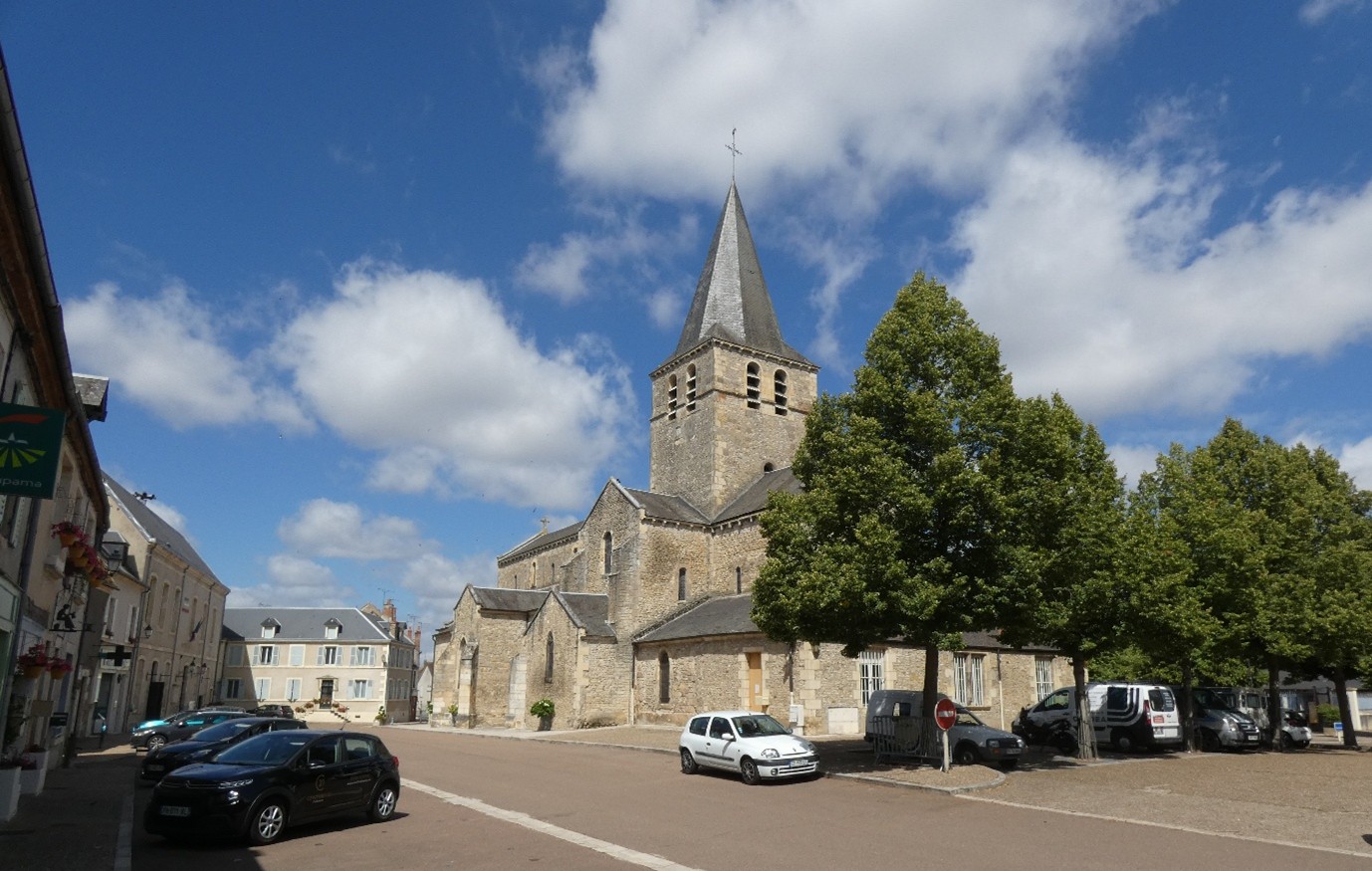
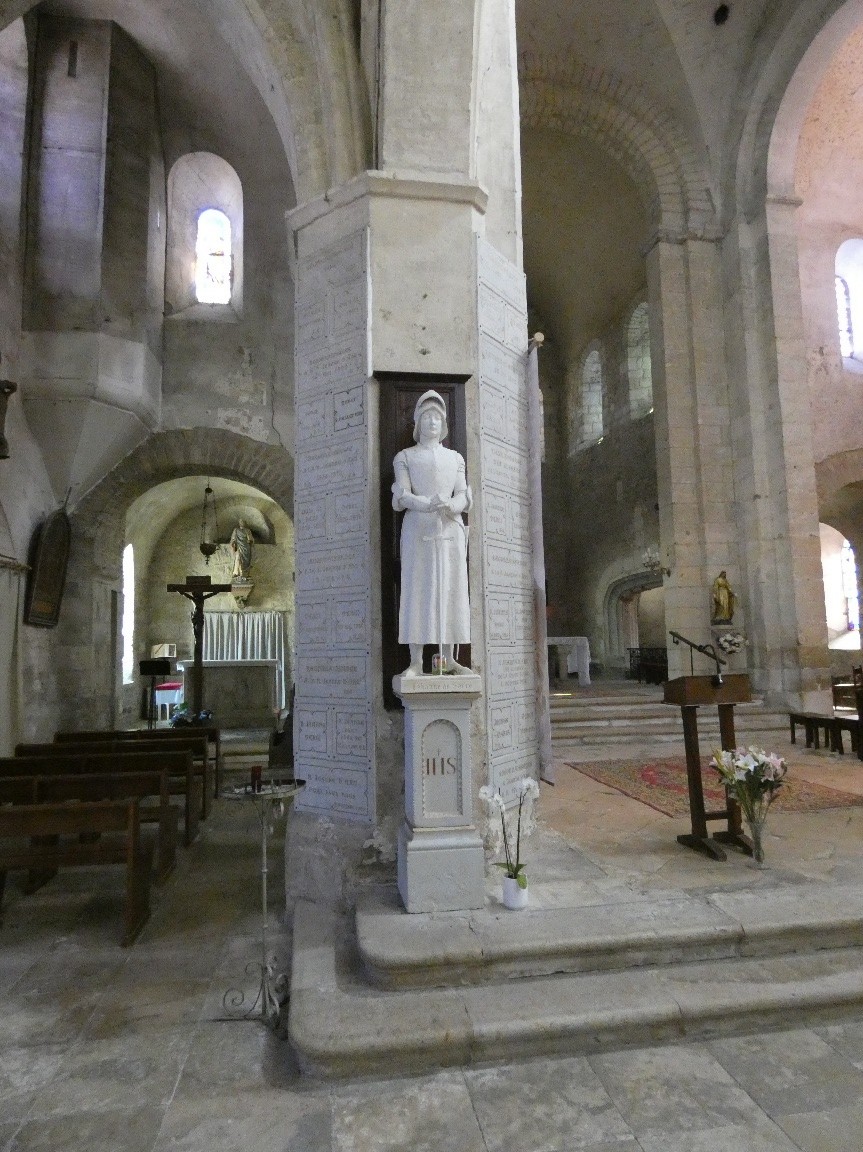
The church of Saint-Pierre and, inside, another statue for followers of the Maid.